

You have noticed gray streaks on the siding, dark stains on the driveway, or a dull film across the storefront, and you know it is time for an exterior cleaning. Then the question comes up: should you hire someone for pressure washing or soft washing? The terms sound similar, and plenty of homeowners and business owners assume they mean the same thing. They do not, and choosing the wrong method can leave surfaces damaged, streaky, or dirty again within weeks.
At Diamond 5 Contracting, we handle exterior cleaning for properties across Ogden and Northern Utah, so we get this question constantly. This guide breaks down how each method works, where each one shines, how they compare, and how to decide which one your property needs.
What Is Pressure Washing?
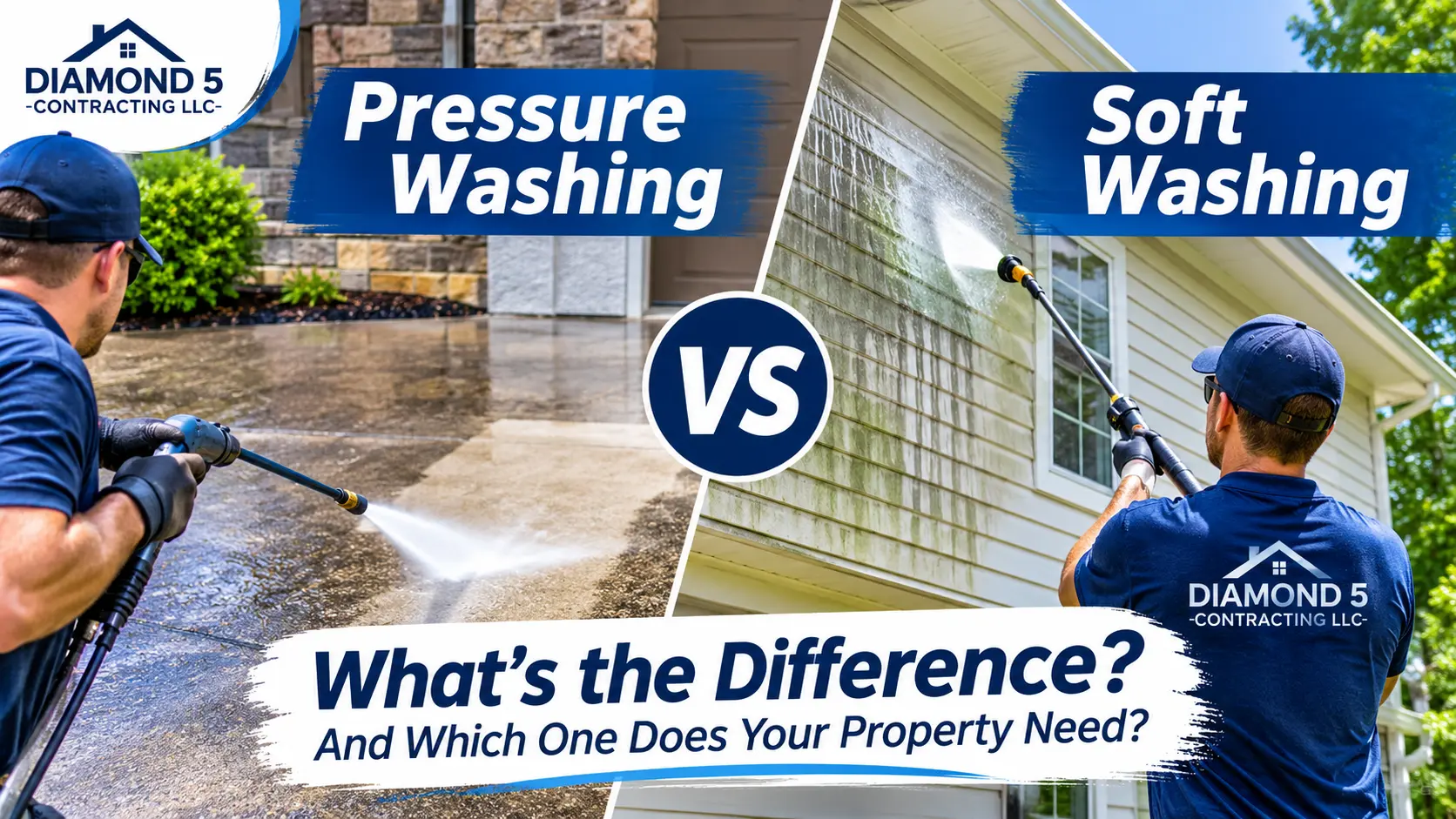
Pressure washing uses a high-powered stream of water, often heated and sometimes paired with a detergent, to blast dirt, grime, oil, and stuck-on debris from hard surfaces. The force does most of the work. Typical equipment runs anywhere from roughly 1,500 to 4,000 PSI (pounds per square inch), depending on the machine and the nozzle.
Think of it as a power tool for tough, durable surfaces. It is the right choice when you need to physically dislodge buildup that has bonded to the material.
Best suited for:
- Concrete driveways, sidewalks, and parking lots
- Patios and walkways
- Dumpster pads and loading docks
- Garage floors and heavily soiled commercial surfaces
- Some brick and stone when handled carefully
What Is Soft Washing?
Soft washing flips the approach. Instead of relying on force, it uses low-pressure water, often around the strength of a garden hose, combined with a professional-grade cleaning solution. The solution breaks down and kills algae, mold, mildew, and bacteria at the source. After it dwells on the surface for a short time, it is gently rinsed away.
Because the biological growth is eliminated rather than just scrubbed off, results typically last longer and the surface stays safe.
Best suited for:
- Vinyl, fiber cement, and painted siding
- Stucco
- Asphalt shingle roofs
- Wood fences and decks
- Window frames, screens, and delicate trim
- Outdoor furniture and other sensitive surfaces
Pressure Washing vs. Soft Washing: Side-by-Side Comparison
The easiest way to understand the difference is to see how the two methods stack up.
| Factor | Pressure Washing | Soft Washing |
| Water pressure | High, often 1,500 to 4,000 PSI | Low, similar to a garden hose |
| How it cleans | Force removes dirt and debris | Cleaning solution kills organic growth, then a gentle rinse |
| Ideal surfaces | Concrete, pavers, masonry, hard surfaces | Siding, stucco, roofs, wood, screens |
| Best for removing | Oil, tire marks, dirt, gum, loose paint | Algae, mold, mildew, pollen, stains from organic growth |
| Risk of damage | Higher if misused on soft materials | Lower, when applied correctly |
| Longevity of results | Good, but growth may return sooner | Often longer, since spores are treated |
| Typical use | Driveways, sidewalks, parking areas | Home exteriors, roofs, fences |
The takeaway is simple. Pressure washing is about power, and soft washing is about chemistry and control. Neither is better across the board, because each excels on different materials.
Can Go Wrong When You Use the Wrong Method
Mistakes are expensive, and they happen more often than you would think.
- Pressure washing siding or stucco can force water behind panels, gouge the surface, strip paint, and invite moisture problems inside the wall.
- Pressure washing a roof can knock granules off shingles and shorten the life of the roof, which is why many shingle manufacturers advise against it.
- Soft washing a heavily oil-stained driveway may not lift the stain, because oil needs targeted degreasing and force.
- Using too much pressure on wood can leave fuzzy, splintered fibers and raised grain.
The lesson: the right technique, nozzle, and cleaning solution matter just as much as the machine.
Which Method Does Your Property Need? A Quick Self-Check
Take a short walk around your property and ask:
- What is the surface made of? Hard and durable usually points to pressure washing. Painted, porous, or delicate usually points to soft washing.
- What does the stain look like? Green, black, or gray streaks suggest algae or mold, so think soft wash. Oil, tire marks, and caked-on dirt suggest pressure washing.
- How old is the material? Aging siding, shingles, and wood need gentler handling.
- Are there windows, screens, or seals nearby? High pressure can damage them.
- Where does the water run? Landscaping, drains, and neighboring properties all need protection.
Many properties need both. A typical project might use pressure washing on the driveway and walkways and soft washing on the siding and trim. That is why a professional assessment is worth it.
Northern Utah Properties Have Their Own Cleaning Challenges
Cleaning in Ogden, Brigham City, Logan, and the surrounding communities is not the same as cleaning on the coast or in the South. Our climate and water create a few local issues:
- Winter salt and de-icer. Roads, parking lots, and entryways collect salt and grit that leave white residue and can wear on concrete.
- Freeze-thaw cycles. Water that enters cracks and expands as it freezes can worsen damage, so surfaces should be cleaned gently and, when appropriate, sealed.
- Hard water spots. Utah is known for mineral-rich water, and sprinkler overspray often leaves chalky deposits on siding, windows, and fences.
- Dust and seasonal grime. Dry conditions, wind, and winter air quality leave a fine film on buildings that builds up over time.
- Shaded areas near irrigation. Even in a dry climate, algae and mildew can appear on north-facing walls and shaded patios where moisture lingers.
These details affect which method, solution, and schedule make sense, and they are the reason local experience matters.
The Solution: Matching the Right Method to Every Surface
The smartest approach is to match method to material. Diamond 5 Contracting is licensed and insured, and our crews evaluate each surface before they start, so concrete, siding, glass, and trim each get the treatment they need. We offer pressure washing alongside commercial cleaning, building cleaning, window screen cleaning, and real estate cleaning, which lets property owners handle exterior and interior upkeep with a single trusted team.
Here is what a professional process typically looks like:
- Inspection. We examine surfaces, stains, drainage, and any sensitive areas.
- Preparation. Plants are protected, openings are secured, and the work area is set up.
- Treatment. The right method is applied: controlled pressure for hard surfaces and low pressure with a cleaning solution for delicate ones.
- Rinse and finishing. Surfaces are rinsed thoroughly and checked for streaks or missed spots.
- Walk-through. We review the results with you and answer questions about maintenance.
For businesses, this approach keeps storefronts, entrances, parking areas, and dumpster pads clean and welcoming. For homeowners, it protects siding, roofs, and decks while restoring curb appeal.
FAQs
1. When is the best time of year for exterior cleaning in Ogden? Late spring through early fall is ideal, since temperatures stay above freezing and surfaces dry quickly. Spring is also a smart time to clean away winter salt and grime.
2. Can pressure washing remove winter road salt and de-icer stains from concrete? It can remove surface residue effectively. For concrete that has already been worn by repeated freeze-thaw cycles, ask about gentler settings and protective sealing afterward.
3. How do I get rid of hard water stains from sprinklers on my siding and windows? Mineral deposits often need a targeted treatment rather than force alone. A professional can test an inconspicuous area first and choose a safe method for your surface.
4. Is soft washing safe for stucco and vinyl siding on homes in Cache Valley and Weber County? Yes, when it is done correctly. Low pressure and the right cleaning solution protect the finish while treating algae and mildew at the source.
5. How often should a commercial property in Ogden, Logan, or Brigham City be washed? Many businesses schedule exterior cleaning once or twice a year, and high-traffic entrances, lots, and dumpster areas may need more frequent attention.
6. Do you serve areas outside Ogden? Yes. Services are available in Ogden, North Ogden, Perry, Willard, Brigham City, Tremonton, Smithfield, Hyrum, and Logan.
7. Will the cleaning solutions harm my landscaping or pets, or run into storm drains? Responsible professionals protect plants, control runoff, and follow local stormwater rules. Ask your provider how they manage water and what products they use, and keep pets away until surfaces are rinsed and dry.
Bring Back Your Property’s Shine
Give your property the clean, fresh appearance it deserves. Stubborn stains, dirt, and grime don’t have to take away from its beauty. Diamond 5 Contracting can help restore the look of your outdoor surfaces with the right cleaning approach. From driveways to siding and storefronts, every area gets the attention it needs. Request your free estimate today and enjoy a property that looks cleaner, brighter, and more inviting.